Sorry if this seems a little off of my usual topic, but I had an incredible experience today that I felt deserved sharing. Today, my school took a day off of a regular learning experience and engaged in an All-School Workshop we dubbed "Spartans Connect." The basic idea was that students and faculty would all come together as equals and share our passions. You could sign up for 45 or 90 minute presentations on someone's passion or expertise. There were presentations on things from travel to cooking to parkour. It ended up being a really fantastic experience, but I took away something really cool that made me think about my blog as well. In high school, you're judged daily based on what you wear or who you're perceived as. People see you wearing all black one day, they assume you're a goth. They see you carrying around a lacrosse stick, they assume you're an athlete. But what if you were just wearing all black because you thought the outfit looked cute, but you're really into painting. Or what if you were just carrying a lacrosse stick for a friend, but you're a fantastic poet? This Spartans Connect All-School Workshop allowed for students who normally wouldn't be able to indulge in their passions to do so, and it also allowed for students to find new passions. Even the teachers who were supposed to be chaperoning the sessions ended up taking a lot away from them, and I think that was a valuable aspect of this All-School Workshop. I'm so excited to see what my school does with this in future years (even though I won't be a student there anymore). This is a really interesting concept that is another way to go about educating our youth.
Wednesday, March 14, 2012


Monday, February 27, 2012
Women in the Oscars
While sitting around with my friends watching the Oscars yesterday, I got to thinking about women's roles in the Academy Awards. With a little research, I found some pretty astonishing (although unfortunately not particularly surprising) information. Women have almost no role in any part of the Oscars process, from the voting to the actual winners. Yes, there are awards for women only, but in gender-neutral awards, men tend to win.

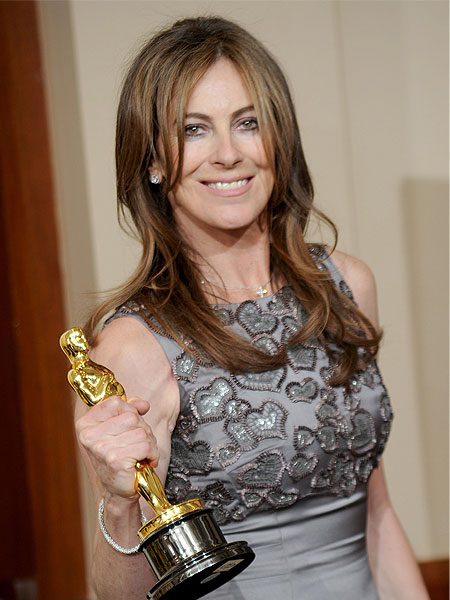
 Why was it that when Kathryn Bigelow won Best Director in 2010 for her film The Hurt Locker? Because she was the first woman ever to win Best Director. Just as astonishing, only four women have ever even been nominated for the award.
And why is this? Well, probably because women are tragically underrepresented in both the voters and the groups of people eligible for the behind-the-scenes awards at the Oscars. Women make up a minute piece of the people involved in writing, directing, and producing the movies nominated for Oscars (see the graphic on the right).
But this very small minority could be making incredibly fantastic films, right? But would they be recognized for them even if they were? For this, we can look at the demographics of the people who vote on the films and people that take home the prestigious Oscar statue. The LA times wrote a fantastic article on not only the gender disparities in the Oscar voters but the large number of old, white men that make up the Academy. Here's an infographic that sums up the findings about the demographics of the Academy:

Now are we all that surprised that women don't tend to win or be nominated for male-dominated awards? Not particularly.
If you're interested in the subject or a little more on how the male perspective is favored in Hollywood films, here is a great video (what I'm talking about is around 3:22):

And why is this? Well, probably because women are tragically underrepresented in both the voters and the groups of people eligible for the behind-the-scenes awards at the Oscars. Women make up a minute piece of the people involved in writing, directing, and producing the movies nominated for Oscars (see the graphic on the right).
But this very small minority could be making incredibly fantastic films, right? But would they be recognized for them even if they were? For this, we can look at the demographics of the people who vote on the films and people that take home the prestigious Oscar statue. The LA times wrote a fantastic article on not only the gender disparities in the Oscar voters but the large number of old, white men that make up the Academy. Here's an infographic that sums up the findings about the demographics of the Academy:

Now are we all that surprised that women don't tend to win or be nominated for male-dominated awards? Not particularly.
If you're interested in the subject or a little more on how the male perspective is favored in Hollywood films, here is a great video (what I'm talking about is around 3:22):
Tuesday, February 14, 2012
Perception of Body Mods
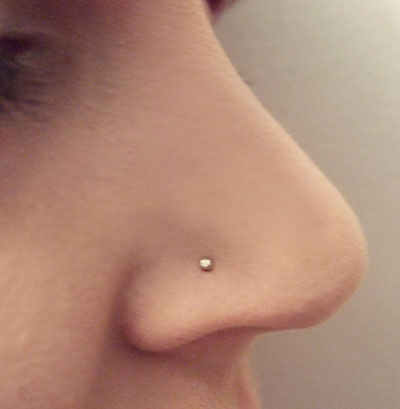
Since yesterday was my 18th birthday, I did what many teens do when they hit this milestone: I bought a lottery ticket and a lighter. Why? Because I can legally do it. But I also got to fulfill a wish of mine. I was finally able to sign my own name on the consent form to get a piercing. I got an industrial piercing in my ear and a stud in my nostril. I'd been dreaming of the day that I could do it for years, and it finally came. This got me thinking about how people perceive body modifications like tattoos and piercings. I got a pretty positive response to my new piercings, but I had a few friends tell me that they didn't like it. Now, I don't take it offensively, but it's interesting that they feel that way.
 The majority of those who disapprove or dislike piercings are of the older generation (my mom said it was my decision, but she didn't like it). Why is that? The common perception and acceptance of body modifications are changing. It used to be a taboo, that only a certain "undesirable" set of the population got, but now more than 70% of Americans have more than one tattoo.
But the opinion is not shifting radically. Though having tattoos and piercings is more accepted, most people believe that they should not be visible, especially in a professional environment. In a 2001 online poll, 85% of 1,009 respondents believed that having a visible tattoo or piercing would hinder you in the workplace.
There is also a negative stigma associated with tattoos. With all other factors the same, a person will be given more negative descriptions if they have a visible tattoo than if they do not by an audience.
Is this a fair assessment? Coming from a young woman who now has 3 new holes in her body and is planning on having more and some ink under her skin: no. What is on the outside of your body and the way you choose to express it does not determine who you are as a person. But I'm interested to hear what you all think. Are body mods appropriate in all contexts or only in certain ones? Does a visible body mod change your opinion of someone? Leave your answers in the comments below!


But the opinion is not shifting radically. Though having tattoos and piercings is more accepted, most people believe that they should not be visible, especially in a professional environment. In a 2001 online poll, 85% of 1,009 respondents believed that having a visible tattoo or piercing would hinder you in the workplace.
There is also a negative stigma associated with tattoos. With all other factors the same, a person will be given more negative descriptions if they have a visible tattoo than if they do not by an audience.
Is this a fair assessment? Coming from a young woman who now has 3 new holes in her body and is planning on having more and some ink under her skin: no. What is on the outside of your body and the way you choose to express it does not determine who you are as a person. But I'm interested to hear what you all think. Are body mods appropriate in all contexts or only in certain ones? Does a visible body mod change your opinion of someone? Leave your answers in the comments below!
Friday, February 3, 2012
Why do girls hate each other?
I have a confession. I have a little bit of a guilty pleasure: JennaMarbles on YouTube. And recently, she posted a video entitled "Why Girls Hate Each Other." Warning: her videos feature excessive profanity, but if you don't mind that, she has some really interesting things to say.
Jenna explains a phenomenon that many girls experience, but don't understand why. Girls are raised to be competitive with one another. If you're a girl, I'm sure you've experienced a time when you didn't feel as pretty as someone or thought that they dressed better than you, and hated or judged them for it. Women are constantly qualified and compared: you are nothing if you are not better than those around you.
And I'm not kidding, every girl has felt this way at one time in her life. Sociological Images posted another interesting blog about a meme of Marilyn Monroe, saying that the "new beautiful" (aka skinny) has replaced Marilyn's style of beauty (aka curvy).
 But what purpose does this meme serve? Telling anyone who's not shaped like Marilyn that they're not beautiful. There are girls who are naturally skinny, like the photo on the right. And growing up, I could count myself into that category. I used to be made fun of for being "too skinny."And why? Probably because the girls who were saying that felt inferior (even though I in turn felt inferior to them).
Why is this exclusive to girls? Why do girls feel this need to be perfect all of the time? ItsKingsleyB***h on YouTube explains this phenomenon manifested in the females in his life:
One thing I find incredibly interesting about what he has to say is that he does not face these same pressures because he is a man. And this is true: men do not face the same pressures women do to be flawless at every hour of the day. The reason his female friends are putting on makeup to go out to the store? Because they feel like they have to. Because they can't be seen at less than their "best."
How do we stop this? I don't know the answer to that, but I can tell you how I personally combat these types of feelings. You have to love yourself more than you care about what others think about you. I know that's way easier said than done...I get it. But it's a process, and all it takes are baby steps to begin. Start reprimanding yourself for negative thoughts about your body or appearance. Don't let yourself think that you're not good enough. Be positive. If you train yourself to think that way, eventually it will start becoming true, even if it's not now.
Because every person is perfect exactly the way they are, and they should be able to do whatever they want. If you want to wear a full face of makeup for fun? Go ahead. But you also shouldn't be afraid to be seen without it. Crazy clothes? YEAH!
If you're interested in this type of mindset, I'd like to direct you to one of my favorite blogs, The Man Repeller. Part fashion, part feminism; Leandra focuses on wearing whatever she wants, bonus points if it makes men run screaming.
And I'm interested to hear what you think about this subject? Is there a way to combat this mindset on a macro level? What about in your daily lives? What do you think?
And I'm not kidding, every girl has felt this way at one time in her life. Sociological Images posted another interesting blog about a meme of Marilyn Monroe, saying that the "new beautiful" (aka skinny) has replaced Marilyn's style of beauty (aka curvy).

Why is this exclusive to girls? Why do girls feel this need to be perfect all of the time? ItsKingsleyB***h on YouTube explains this phenomenon manifested in the females in his life:
How do we stop this? I don't know the answer to that, but I can tell you how I personally combat these types of feelings. You have to love yourself more than you care about what others think about you. I know that's way easier said than done...I get it. But it's a process, and all it takes are baby steps to begin. Start reprimanding yourself for negative thoughts about your body or appearance. Don't let yourself think that you're not good enough. Be positive. If you train yourself to think that way, eventually it will start becoming true, even if it's not now.
Because every person is perfect exactly the way they are, and they should be able to do whatever they want. If you want to wear a full face of makeup for fun? Go ahead. But you also shouldn't be afraid to be seen without it. Crazy clothes? YEAH!
If you're interested in this type of mindset, I'd like to direct you to one of my favorite blogs, The Man Repeller. Part fashion, part feminism; Leandra focuses on wearing whatever she wants, bonus points if it makes men run screaming.
And I'm interested to hear what you think about this subject? Is there a way to combat this mindset on a macro level? What about in your daily lives? What do you think?
Friday, December 30, 2011
Steve Jobs by Walter Isaacson

 But the thing that I most took away from this was how much work and thought was placed into the design and aesthetics of each and every Apple product. Steve Jobs was a maniac when it came to even the smallest part of a product's design. When the first Macintosh came out, he agonized over the little details of the title bars and fonts, and when another engineer called him out on how nitpicky he was being, he replied, "Can you imagine looking at that every day? It's not just a little thing, it's something we have to do right." It's not something you probably think often about, but looking at an ugly screen for an entire day would not be particularly pleasant.
I've always romanticized Apple products, and this just gave justification to that. From the moment that you open the box of a new iProduct, the aesthetic experience is engineered to be as good as it can be. And even the parts that you can't see are made to be beautiful. Steve Jobs learned from his carpenter father that, "When you're a carpenter making a beautiful chest of drawers, you're not going to use a piece of plywood on the back, even though it faces the wall and nobody will ever see it. You'll know it's there, so you're going to use a beautiful piece of wood on the back. For you to sleep well at night, the aesthetic, the quality,has to be carried all the way through," and this mantra informed his entire design philosophy.
 Even in his most frail days before receiving a liver transplant, Jobs was fixated with products looking good. While under heavy anesthesia, he refused to wear a mask because it was ugly and made the doctors bring him different choices. This is extreme, but it is what we have to thank for the beauty that is the iPod, iPhone, iPad, and Mac computers.
 Whether you're interested in technology, aesthetics, or just are fascinated or intrigued by the genius that is Steve Jobs, I would highly recommend picking this book up. Jobs had such an impact on our society, and I believe that this biography was a great representation of the man that founded one of the most influential technology companies in the world.
Tuesday, December 13, 2011
BLACK PEOPLE IN THE HUNGER GAMES?!
By now many of you have probably read the novel The Hunger Games. If you haven't, here's a quick synopsis. There has been a huge uproar in the fandom about the characters Cinna and Rue, who many pictured to be white. I'm willing to admit that I can count myself into those who imagined these characters as white. But let's take a look at how they are described in the books.

Cinna:

Rue:
And to end this confusion all together, a little bit from an interview with the author of The Hunger Games, Suzanne Collins:

Cinna:
"I'm taken aback by how normal he looks...But Cinna's close-cropped hair appears to be its natural shade of brown. He's in a simple black shirt and pants. The only concession to self-alteration seems to be metallic gold eyeliner that has been applied with a light hand. It brings out the flecks of gold in his green eyes" (Collins 63).And yet people are AGHAST that Lenny Kravitz is cast as Cinna. The only contradictory detail I could find in the trailer vs the book's description was the color of his eyes, which are hard to tell exactly but look very much like they are brown.

Rue:
"...a twelve-year-old girl from District 11. She has dark brown skin and eyes, but other than that, she's very like Prim in size and demeanor" (Collins 45).And again, Rue, since she is constantly described by Katniss as being very much like Prim, was assumed to be young, white, and blonde, though it is clearly stated in the book that she has "dark brown skin."
And to end this confusion all together, a little bit from an interview with the author of The Hunger Games, Suzanne Collins:
Some readers have expressed real frustration that white actors were cast in the roles of Katniss and Gale, who they felt were clearly described as biracial in the book. Do you understand or share any of that dismay Suzanne?Why is it that many people assume neutral gender as being white? Even I, as a bi-racial person, assumed that both of these characters were white, even though it was contradicted in the text of the novel. I'd like to explore more on this subject, which I will do in future blog posts. I'd also like to hear your thoughts on this issue. How do you feel about these casting decisions? If you've read The Hunger Games, is this how you imagined Rue and Cinna? What are your thoughts on white being a "neutral race?" Leave any insight you have in the comments below, I'd love to hear what you have to say!
SC: They were not particularly intended to be biracial. It is a time period where hundreds of years have passed from now. There’s been a lot of ethnic mixing. But I think I describe them as having dark hair, grey eyes, and sort of olive skin. You know, we have hair and makeup. But then there are some characters in the book who are more specifically described.
GR: Thresh and Rue.
SC: They’re African-American.
So will those roles go to black actors?
GR: Thresh and Rue will be African-American. It’s a multi-racial culture and the film will reflect that. But I think Suzanne didn’t see a particular ethnicity to Gale and Katniss when she wrote it, and that’s something we’ve talked about a lot.
Thursday, December 8, 2011
Fashion in Politics
 Appearance is a huge part of politics. Voters will not elect or support someone that does not look a certain way, and especially for women this is a huge issue. A male politician has a neutral dress option: dark suit, white shirt, tie. What does a female politician have? Nothing of the sort. Women are constantly being judged based on what clothes they are wearing, not what new revolutionary or intellectual ideas that they have. Voters want someone that looks put together, that looks appropriate, and does not dress too "out there." Take Condollezza Rice for example, she wore a dark coat and heeled boots, and much of the American public was uncomfortable with her dressing "too sexy." This is an issue for female politicians in America. They are constantly judged based on what they wear.
 Michelle Obama has worked hard on a national campaign to fight child obesity while serving as First Lady, but when she steps out most of the headlines about her are related to what she chose to wear. This is unfortunate for her because it shifts the focus of whatever she does to her attire, and if it is not deemed appropriate then it doesn't matter what she originally set out to do, because all eyes are on the clothes. To give Mrs. Obama quite a bit of credit, though, I think that she has done wonderful things to choose her clothing very wisely. She recognizes the position that she is in, and has not only showcased up and coming designers like Jason Wu, who designed her dress for the Inaugural Ball, but she has worn very affordable and modest clothing, so that a typical American woman has even a hope of being able to emulate her. This is a very smart move politically as well, because she seems much more relatable when you have the same cardigan in your closet that the First Lady is wearing to lunch.
And finally,what "fashion and politics" blog post would be complete without discussing Hillary Clinton? The current Secretary of State has come under probably the most fire than any other female politician about her attire. There are many a blog post on the internet bashing Hillary's fashion choices, regardless of what she may have been doing to better America. The critical language used is astonishing:
"Nice try with those chic shades, Hill but not even Jackie O could salvage this look from the depths of frumpiness. The retro braided headband is bad enough, but the boxy black jacket is not helping Hillary's cause. We just hope Australian Foreign Minister Kevin Rudd was not as horrified by this look as we are."
“All these big, baggy menswear-tailored pantsuits. No, I’m really serious. She wears pantsuits that are really unflattering.”
And now I open it up to you, readers. What do you think about this? Is there a double standard surrounding fashion in politics in respect to gender? Is it fair to expect women to dress on a different standard than men?
Subscribe to:
Posts (Atom)